
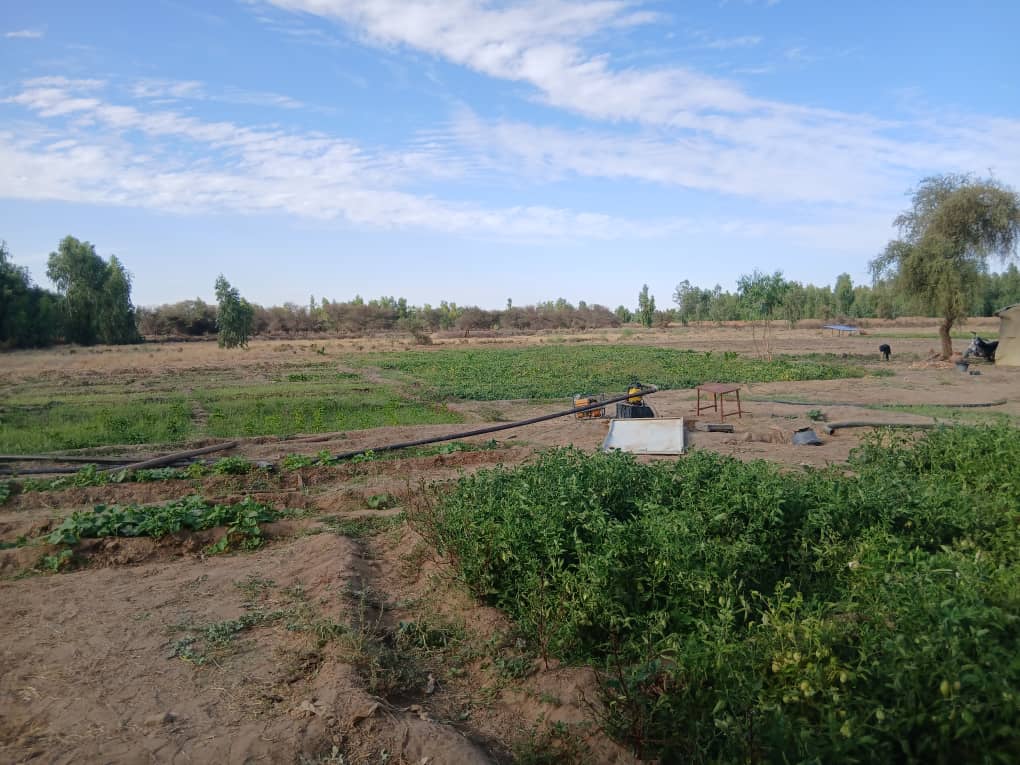
How Can we finance the cleaning of this erea . It's an illustrative picture
Comments (14)

This photo shows a problem we all know: overgrown land + plastic waste = mosquitoes, flooding, and wasted space. But it also shows opportunity.
Question for us: How do we clean this without waiting for government money?
In my community we do 3 things:
1. Free labor, paid materials – Youth + LC1 mobilize for ‘bulungi bwansi’. We only fundraise for gloves, bags, and 1 dump truck.
2. Make it pay after – After cleaning, we turn the land into a vegetable garden or football field. The small income pays for monthly slashing so it never goes back to bush.
3. Partner smart – Local shops sponsor bags/gloves for a logo on our T-shirts. Schools join for community service hours.
So my take: Don’t just ask for money to clean. Plan how the land will earn money to stay clean.
What is your group doing in your area? Let’s share real models that work, not just ideas.

Financing Climate Action: Shifting from Global Funds to Autonomous Ground Solutions
For climate financing to generate real and lasting change in our villages, towns, and countries, it must stop being viewed as emergency aid. Instead, it must become a direct productive investment in local green entrepreneurship.
Based on my practical experience in Timbuktu (Mali) with Dicko Entreprise, here are the three essential pillars to reform climate action financing:
1. Decentralize Climate Finance toward Local Green SMEs
Large international funds (such as the Green Climate Fund) often remain blocked at the macro-economic or state level due to heavy administrative barriers. To transform our villages, we must establish decentralized green micro-finance windows at the local level. Seed grants or zero-interest loans would allow young agri-preneurs to directly acquire crucial adaptation technologies.
2. Fund Technology Transition (CAPEX) Rather Than Operation (OPEX)
In our Sahelian villages, using petrol-powered motor pumps financially ruins producers due to high fuel costs, while heavily emitting CO2. Financing climate action intelligently means subsidizing the initial investment in clean energy (such as solar pumping). Once the solar system and drip irrigation are installed, operational costs drop to nearly zero. The farming business becomes instantly profitable, autonomous, and resilient to economic shocks.
3. Target Investments toward Triple-Dividend Solutions
Communities will only adopt climate changes if they bring immediate economic profitability. Funding must target circular impact projects. For instance, our model of 100% organic fruit and vegetable farming during both normal and off-seasons allows us to achieve:
Climate / Environment: Restoring fragile soil fertility and conserving scarce water resources against extreme evaporation.
Economy: Creating sustainable local jobs for youth and stabilizing agricultural income all year round.
Health / Cities: Supplying urban markets with healthy, fresh food entirely free of chemical inputs.
🚀 My Contribution to the 2026 Call for Solutions
At Dicko Entreprise in Timbuktu, we prove daily that combining solar drip irrigation with organic farming is a profitable, sovereign, and highly scalable adaptation model across the entire Sahel. Financing this type of concrete solution guarantees an immediate, visible, and measurable impact for our populations

@Richard Bazonga
It's an illustrative picture, because the platform ask for picture......
And all what you said, i know that....i Can plan like you said .....
I need an overview
Which group are you talking about ? 🙂🙂
Thanks for your intervention
Thank you so much for your comment and for the question
You’re right, it’s an illustrative picture because the platform asked us to add one. The real land in my community looks similar - overgrown with grass and some plastic waste.
About the group I’m talking about: I’m part of Youth for Climate Action in Hoima and kampala Uganda. We are a small group of young people who meet at church and in the community. Our goal is to clean our environment and teach people about climate change, but we do it with very little money.
https://www.facebook.com/share/1Ge57brLjw/
This is the link of page follow it you will see all my réalisation ,i have gotten a problem to share pictures on this plateforme i tried it many times.
Mine is not only an idea it's a reality.thanks
Ok, very interesting
Thanks my Dear Anne -Marie Djikinhedo for the appréciation, together we will Say one day ,it was not easy but we did achieve our Goals,to make the desert bloom.

C'est très bien Ibrahim Almoustapha. C'est vraiment à encourager.
On espère bien. Soyons optimiste.
Le changement climatique étant un soucis majeur de notre ère, mettre l'accent sur les défis climatique à relever tous en mettant les jeunes au coeur de l'action l'objectif visé peut être atteint d'ici 2030.
Les 17 objectif à atteindre seront une réalité que vivront les générations futures. Le maintient du seuil des 1,5°C est objectif mondial qui ne peut être réalisé que par une forte motivation pour le climat.
@Dramane Ouattara
Merci bien
Je pense que, le système des nations unies, ont un fonds de garantie pour ça
Vérifier bien
Chercher et vous verrez....
Évidemment, j'en suis conscient @Anne-Marie DJKINHEDO.
Please log in or sign up to comment.
Thanks for your reactions.......
Anne-Marie DJIKINHEDO
Together we will achieve our Goals